
How Beverage Brands Can Use Bars and Restaurants to Reach New Customers
2026 research shows how consumers trying wine, spirits, and beer at bars and restaurants can influence what they buy later in stores.
Published on:
November 18, 2026
Published By:
MHW Mark
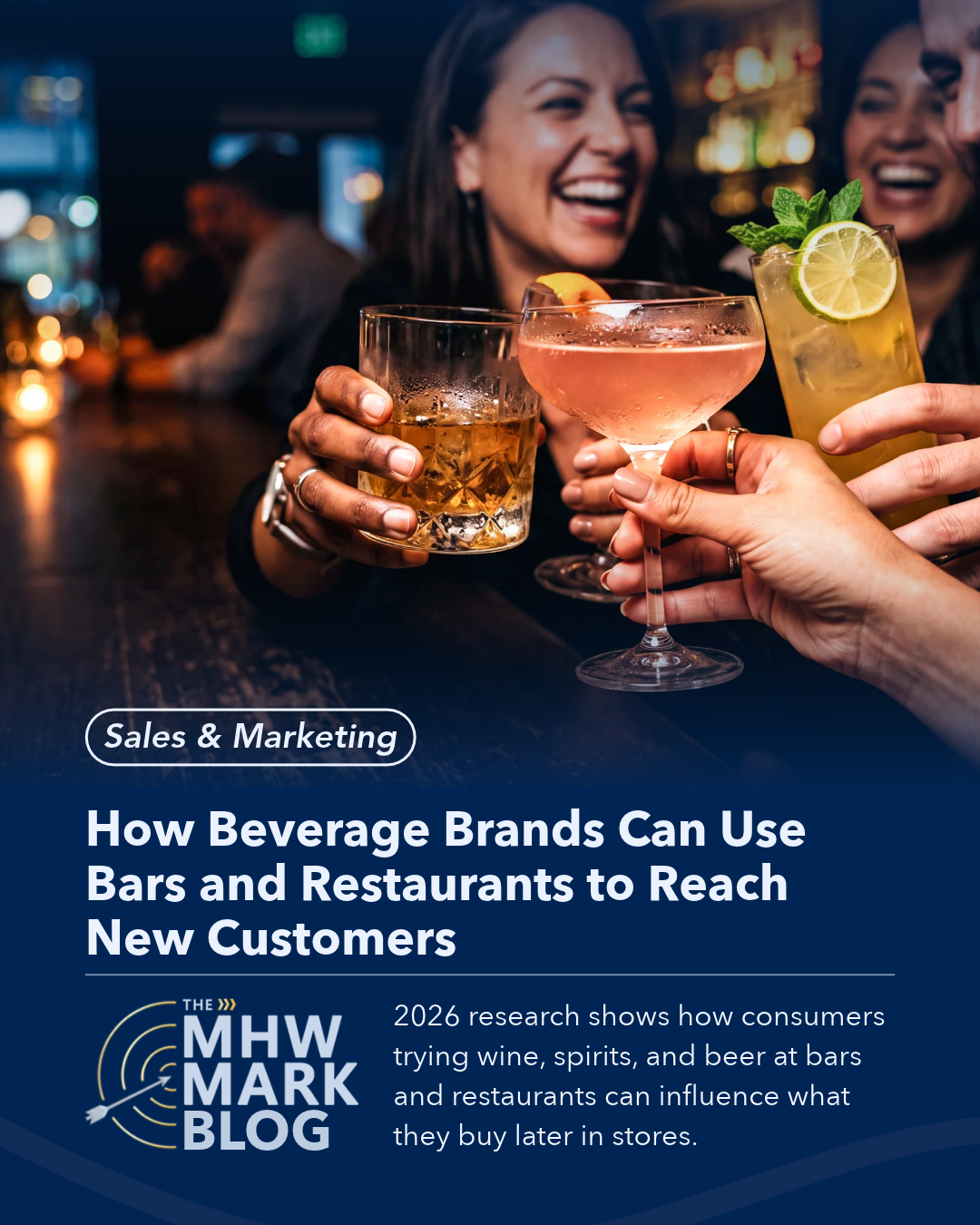
Picture this: Someone orders an unfamiliar beer at a bar, loves it, and scans the store aisle for that exact label a few days later. For beverage brands, turning that one-off pour into a repeat retail buy is a huge win.
While that connection might seem obvious, the numbers prove just how powerful it is. Read on to see how research published in 2026 by NielsenIQ, the National Restaurant Association, and Southern Glazer’s Wine & Spirits breaks down just how heavily a night out at a bar or restaurant shapes what ends up in a shopper’s cart later.
Consumers Are Willing to Try New Drinks When Dining Out
According to the National Restaurant Association’s August 2026 Beverage Trends report, 72% of surveyed consumers said restaurants are good places to learn about beverages they haven’t tried before. Another 54% said they enjoy being adventurous when selecting a beverage.
These findings cover beverages generally, including non-alcoholic options, but separate research shows similar interest in trying new alcoholic drinks.
In an April 2026 report, NielsenIQ found that 36% of surveyed consumers had tried a new drink while eating or drinking out. Among Gen Z and millennial respondents, that figure rose to 58%.
Beer and cocktails were the most common types of new drinks consumers reported trying!

A Drink at a Bar Can Lead to a Retail Purchase
Trying a brand at a bar or restaurant doesn’t necessarily end with that visit.
In January 2026 research, NielsenIQ reported that 73% of surveyed Gen Z and regional craft drinkers said they were more likely to buy a brand in a store after trying it at a bar or restaurant. Another 69% reported having already made that type of purchase.
While these findings apply to that specific consumer group rather than all U.S. drinkers, they show how trying a product while dining or drinking out can influence later purchases.
A September 2026 report from Southern Glazer’s Wine & Spirits supports the importance of these settings. Their findings were that nearly half of consumers consider bars and restaurants the best places to try a new brand.
Make It Easy for Customers to Recognize Your Brand
What do we do with these insights? Getting your product onto a bar or restaurant menu is a good start, but customers also need to know which brand they’re drinking if you want them to look for it later.
When working with bars and restaurants, consider how your product will be presented to customers. For example:
– Wine: Work with restaurants to list your winery’s name alongside the grape variety and region, rather than using a generic description like “Italian Pinot Grigio.”
– Spirits: If your gin or vodka is featured in a cocktail, encourage the bar to identify your brand on the menu rather than listing only the type of spirit.
– Beer: Make sure customers can identify your brewery and the specific beer they’re drinking through draft menus or tap displays.
Staff education also helps: giving bartenders and servers a short explanation of your product’s flavor, origin, and distinguishing features makes it easier for them to recommend it.
These small details can help customers remember your brand and recognize it when they encounter it again in a store.
What Beverage Brands Can Take Away From This Research
Choosing the right bars and restaurants is just as important as how your product is presented. A winery might focus on restaurants whose wine programs match its target customers, while a spirits brand could introduce its products through cocktails that showcase their flavor. Brands can also consider tastings or other promotional activities where permitted.
Retail availability matters, too. If consumers enjoy a product at a bar or restaurant, having that product available in nearby stores gives them an opportunity to purchase it again. The goal isn’t simply to get a product into as many accounts as possible, but to choose locations where the right consumers can discover it and find it again.
At MHW, we support beverage alcohol brands with U.S. importation, compliance, and wholesale distribution. Our national platform supports sales to authorized distributors across all 50 states, while our wholesale operations also serve licensed bars, restaurants, and retailers in New York, New Jersey, California, and Florida.
For brands developing their U.S. sales strategies, the research is a useful reminder that an individual drink order can be more than a one-time purchase. It can also be a consumer’s introduction to a brand they may choose again.